
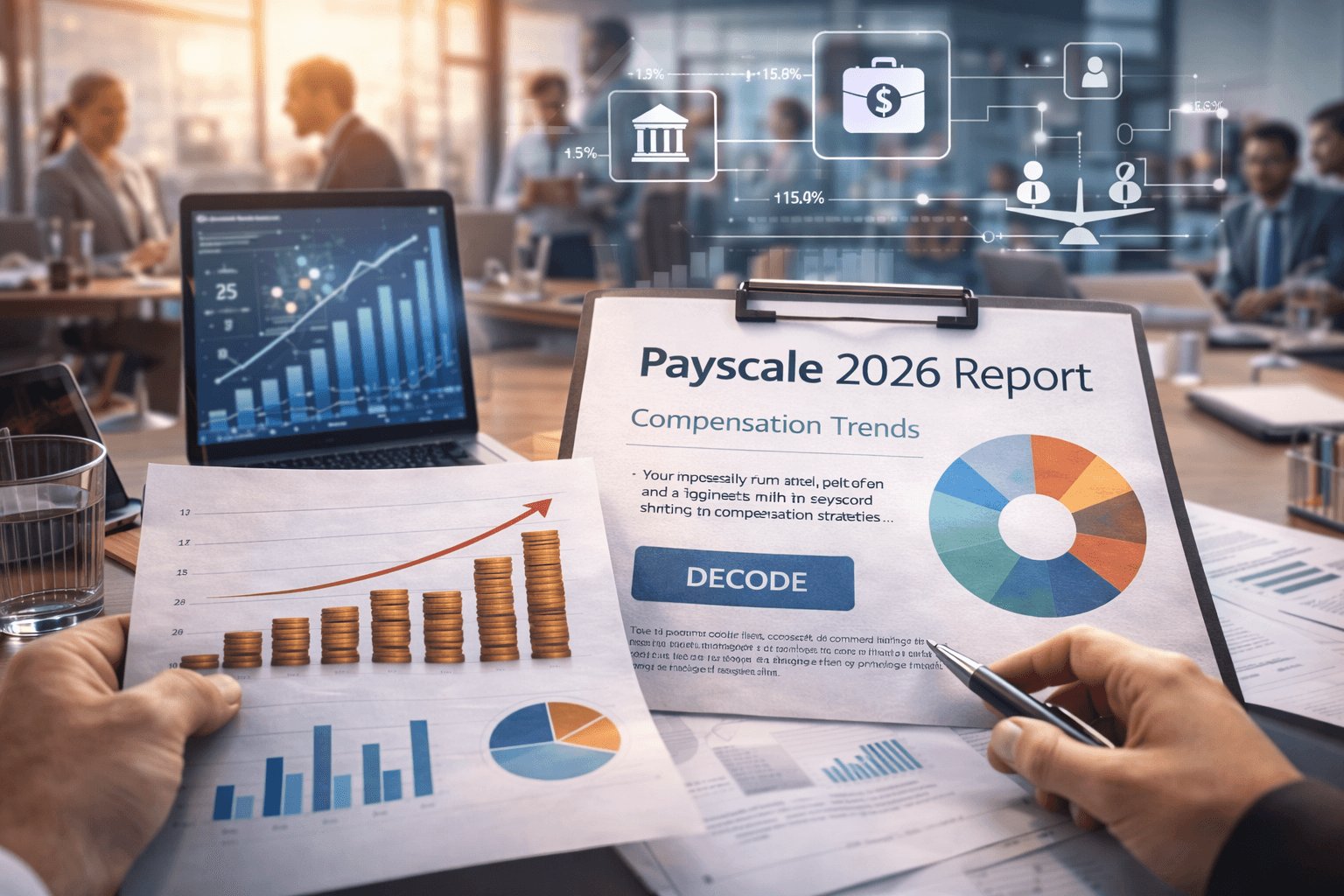
Payscale’s 2026 Report Highlights Major Shift in Corporate Pay Strategies
Estimated Read Time: 4 minutes
Payscale has released its 2026 Compensation Best Practices Report, revealing significant changes in how organizations are approaching compensation planning amid economic uncertainty, evolving workforce expectations, and the growing impact of artificial intelligence on job roles.
The annual report indicates that companies are moving away from traditional salary-focused compensation models toward more strategic and performance-aligned pay frameworks designed to improve talent retention while maintaining financial discipline.
Balancing Pay Expectations with Budget Constraints
According to the report, more than half of organizations identify balancing employee pay expectations with limited financial resources as their biggest compensation challenge. Employers are increasingly required to manage rising salary demands while operating under tighter compensation budgets.
At the same time, inaccurate salary data from unofficial online sources is contributing to employee pay perception challenges, making transparent and data-driven compensation strategies more important than ever.
AI Skills Reshaping Compensation Decisions
As artificial intelligence continues to influence workplace roles, many organizations have updated job descriptions to include AI-related skills and competencies. However, a large portion of employers have yet to adjust compensation structures to reflect these evolving skill requirements.
This growing disconnect highlights the complexity HR leaders face when aligning emerging technical capabilities with fair and competitive pay models.
From Broad Pay Increases to Strategic Alignment
The report identifies 2026 as the “Year of Strategic Alignment,” signaling a shift toward compensation decisions tied closely to measurable business outcomes and workforce performance. Rather than distributing uniform salary increases across teams, organizations are increasingly prioritizing targeted rewards and performance-based differentiation.
Shrinking bonus pools and standardized pay increases—sometimes referred to as across-the-board or “peanut butter” pay strategies—are also becoming more common as companies attempt to manage compensation equity while controlling costs.
Growing Focus on Pay Transparency
Pay transparency initiatives continue to expand globally, with nearly half of surveyed organizations strengthening transparency practices such as publishing salary ranges and improving internal compensation communication.
Executive leadership teams are also treating compensation as a strategic business priority, integrating pay decisions more closely with organizational performance, workforce planning, and long-term talent strategies.
Preparing for the Future of Compensation
Payscale’s findings suggest that modern compensation management is evolving into a data-driven discipline supported by analytics, real-time market benchmarking, and clearer governance models.
As labor markets stabilize and hiring conditions shift, organizations are expected to rely increasingly on strategic pay alignment rather than aggressive salary growth to attract and retain skilled talent.
Additional insights from the 2026 Compensation Best Practices Report are available on the Payscale compensation trends page.