
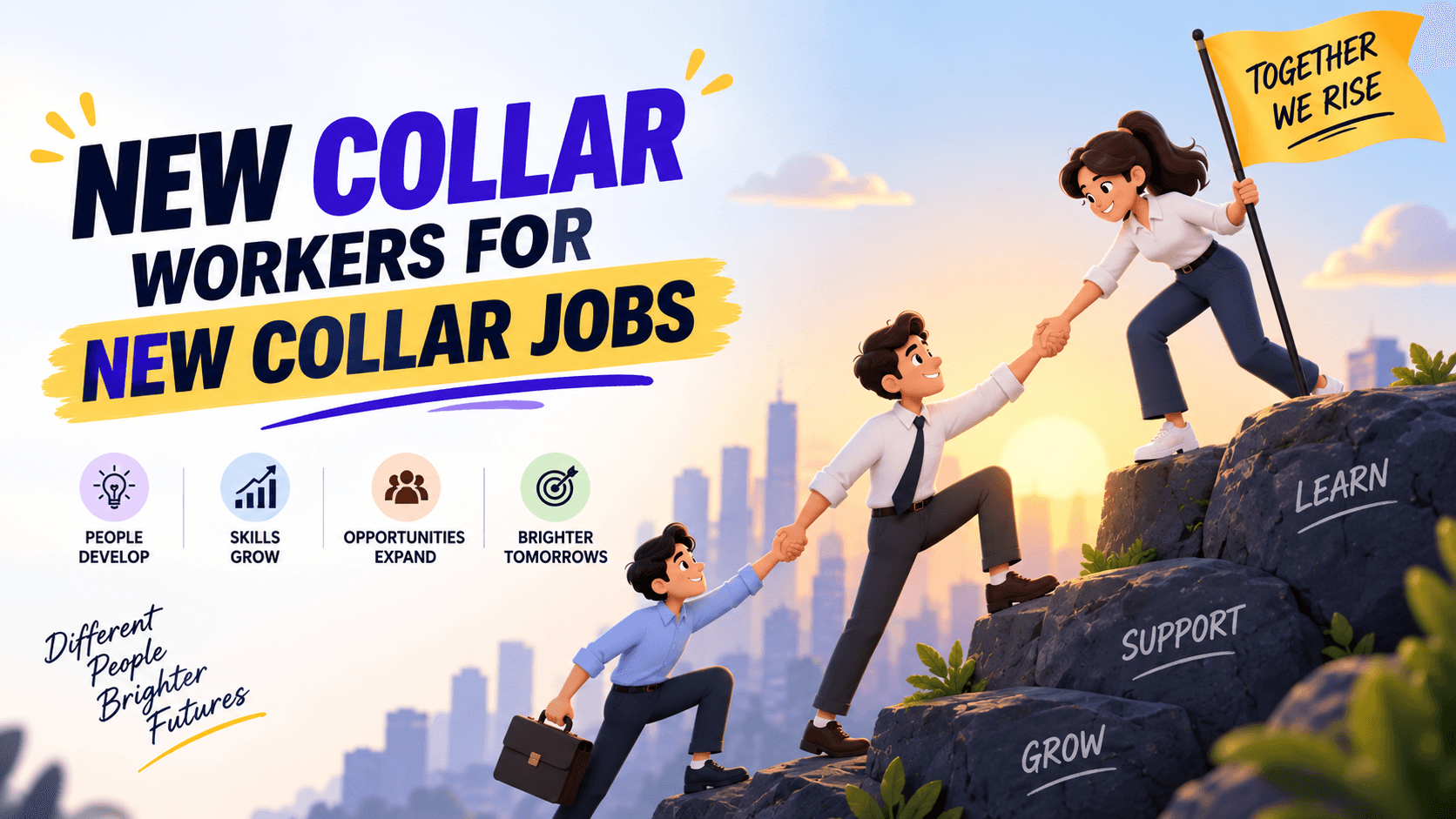
New Collar Jobs: 7 Smart Moves to Fix Skills Gaps
New collar jobs may be the way forward for HR pros and their organizations. New collar workers tend to combine technical fluency, manual capability and adaptability—and these roles are becoming the backbone of the ever-changing economy, according to a report from LinkedIn. In fact, the US Bureau of Labor Statistics estimates that about 60% of new jobs will come from occupations that typically don’t require a degree by 2030.
As AI accelerates change across every industry, these roles are surfacing in construction, maintenance and repair, transportation, healthcare, technology and nearly every field that touches them. The question for HR leaders is whether their organization is ready to embrace, promote and nurture them.
“Both of those terms leave out a tremendous segment of our population: smart, high-aptitude, and in many cases skilled individuals who, for whatever reason, decided not to pursue a degree—the new collar workers.”
— Don Gannon-Jones, former VP of Content, KaratWho’s Filling New Collar Jobs?
If blue collar employees are traditionally trade workers and white collar workers are those with four-year degrees, new collar workers sit in between—defined by aptitude rather than credentials. They’re in good company: Bill Gates, Steve Jobs, Michael Dell, Jack Dorsey and Larry Ellison were all new collar workers before the term existed. Because these roles don’t require degrees but do require adaptability, you can often train tenured or new employees for the position you need to fill—especially useful since the roles themselves will keep evolving.
Continuing ed courses, online classes, certification programs and boot camps are popular and relatively inexpensive ways to get up to speed on technology. New collar employees only need relevant skills to get a foot in the door—and, as Gannon-Jones notes, they often bring aptitude, productivity, humility and a strong desire to learn the business from the inside out.
“Because only a small share of today’s workforce is equipped for this evolving world of work, companies will struggle to fill these roles. Leaders therefore have a strong incentive to widen how they define and develop skills.”
— LinkedIn Research TeamFinding New Collar Workers
You don’t have to look far. Current employees already understand the business and hold institutional knowledge that can’t be replaced—it’s just a matter of upskilling or reskilling. There’s also a generation of young adults, soured by rising college costs and student debt, who’ve pursued trade school, certifications and the school of hard knocks. Three moves help you find and hire them: strip degree requirements from job descriptions except where legally required (law, finance, medicine); be explicit about job-relevant skills and list only the make-or-break ones; and assess actual ability during interviews rather than relying on where a candidate worked or studied.
Help New Collar Workers Succeed
New collar roles will keep evolving—probably faster than traditional jobs have in past decades—so training and reskilling will always be essential. Invest in your people with four moves: offer ongoing on-the-job learning that extends beyond technical training into communication, leadership and decision-making; set up mentorships (mentors don’t need degrees either); broaden workers’ view by exposing them to operations meetings, C-level shadowing and time in other departments; and redefine what success looks like in performance reviews to reflect how developing employees grow into their roles.
New collar is the future. The BLS estimates about 60% of new jobs by 2030 will come from occupations that typically don’t require a degree.
Aptitude over credentials. New collar workers bring technical fluency, adaptability and a drive to learn—value that a four-year degree doesn’t measure.
Talent is already close by. Existing employees and degree-skeptical young adults are both strong candidates—reachable through internal mobility and skills-focused recruiting.
Rewrite your job descriptions. Drop degree requirements except where legally mandated, name the specific skills that matter, and assess real ability in interviews.
Invest to retain. Ongoing learning, mentorships, cross-department exposure and redefined performance reviews help new collar workers succeed and grow into leaders.