
Employers Embrace AI for Benefits — Employees Remain Cautious
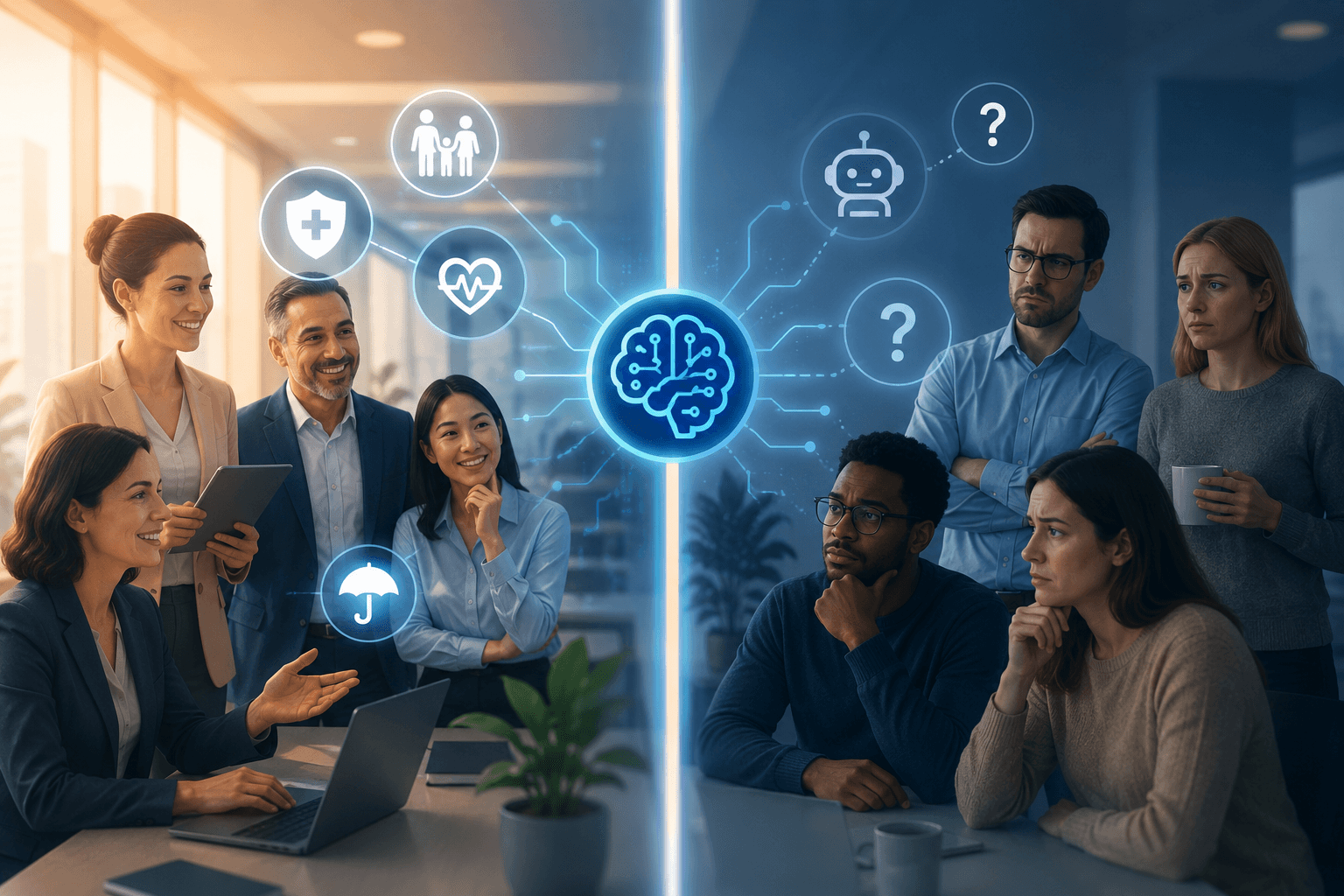
Prudential Financial, in the second installment of its 2026 Benefits & Beyond study, has uncovered a striking divide between employer enthusiasm and employee hesitation around AI in benefits administration. While 83% of employers are interested in using AI to help workers better understand their benefits, only 58% of employees say they would use it — and a mere 24% actually do so today. The findings, drawn from a national online survey of 3,096 full-time U.S. employees and 760 employers conducted in January 2026, reveal that trust, not technology, is the defining barrier.
The gap is not simply about unfamiliarity with AI. According to the study, 87% of organizations and 79% of employees report already using AI in some capacity — whether at work, at home, or elsewhere. The divide lies in how willing workers are to let AI guide decisions as personal and consequential as their health and financial benefits.
"AI can make benefits simpler, more personalized and easier to use, but employees won't embrace it unless they trust it. That means helping people understand how these tools work, how their data is protected, and how AI can strengthen the human support they still want and need when making important benefits decisions."
— Michael Estep, President, Prudential Group InsuranceThe Trust Gap: What's Holding Employees Back
The study surfaces a clear asymmetry in how employers and employees perceive AI risk. Both groups cite privacy and security as top concerns — 49% of employers and 52% of employees — but the similarity ends there. Employees are twice as likely as employers to say they simply do not trust AI at all (25% vs. 12%). Workers also express heightened anxiety about inaccuracy, ethics, and job displacement: 27% of employees are concerned about the ethics of AI, and 16% fear it will ultimately take over their jobs.
Despite these reservations, employees are not universally resistant to sharing personal data. 65% of employees say they are comfortable with their employer managing personal data for benefits purposes — a figure that climbs to 75% among workers in technology-related roles. This suggests that trust is not binary: it can be built through transparency, clear data governance, and demonstrated value.
"Employee benefits is one of the clearest applications for AI given how complex and individual these decisions can be. Many employees still struggle to navigate their benefits options. AI can help simplify that, but they need confidence in the guidance they receive and how their information is handled. When that trust is in place, it can drive stronger engagement and better outcomes."
— Scott Roth, VP & Chief Technology Officer, Prudential Group InsuranceWho Is Using AI — And What Drives Adoption
Adoption rates vary significantly by workforce segment. Among those already using AI for benefits guidance, 40% are unionized employees, while 27% are salaried employees and sole decision-makers — noticeably higher than their peers. The study also finds that employees who feel the most encouragement to use AI tend to feel most positive about the technology, suggesting that cultural framing matters as much as the tools themselves.
More broadly, employees are already integrating AI into their personal and professional lives: 59% use AI to answer personal life questions, 53% use it to work more efficiently, and 51% use it to answer questions in their roles at work. Millennials lead in professional AI usage across the board. The challenge for employers is bridging the gap between these everyday habits and trust in AI for higher-stakes decisions like benefits navigation — an area where the consequences of poor guidance can directly affect financial security and health outcomes.
Prudential's findings align with a broader industry signal: a majority of CHROs — 92%, according to SHRM's 2026 CHRO Priorities report — anticipate further AI integration into the workforce this year. But adoption without trust risks low engagement and diminished ROI. For organizations moving quickly, the imperative is not just to deploy AI tools, but to invest in the transparency and education that make those tools feel safe to use.
A Significant Adoption Gap. 83% of employers want to use AI for benefits guidance, but only 58% of employees would use it and just 24% do today — revealing that employer enthusiasm is far outpacing worker willingness, per Prudential's 2026 Benefits & Beyond study.
Trust Is the Core Barrier. Employees are twice as likely as employers to say they simply don't trust AI (25% vs. 12%), and 27% raise concerns about AI ethics. Privacy, security, and fears of job displacement compound the hesitation.
Data Sharing Willingness Exists. Despite trust concerns, 65% of employees are comfortable with their employer managing personal data for benefits — rising to 75% in tech roles — signaling that trust can be earned through transparency and governance.
Segment Differences Matter. Adoption varies widely by workforce type: 40% of unionized employees already use AI for benefits, compared to 27% of salaried workers. Encouragement and cultural framing significantly influence who adopts AI and how positively they view it.
Benefits as a Trust-Building Gateway. Prudential positions employee benefits as one of the most natural and impactful domains to introduce AI — complex enough to benefit from AI guidance, and personal enough that building trust there could set a positive precedent for broader AI adoption across the organization.