
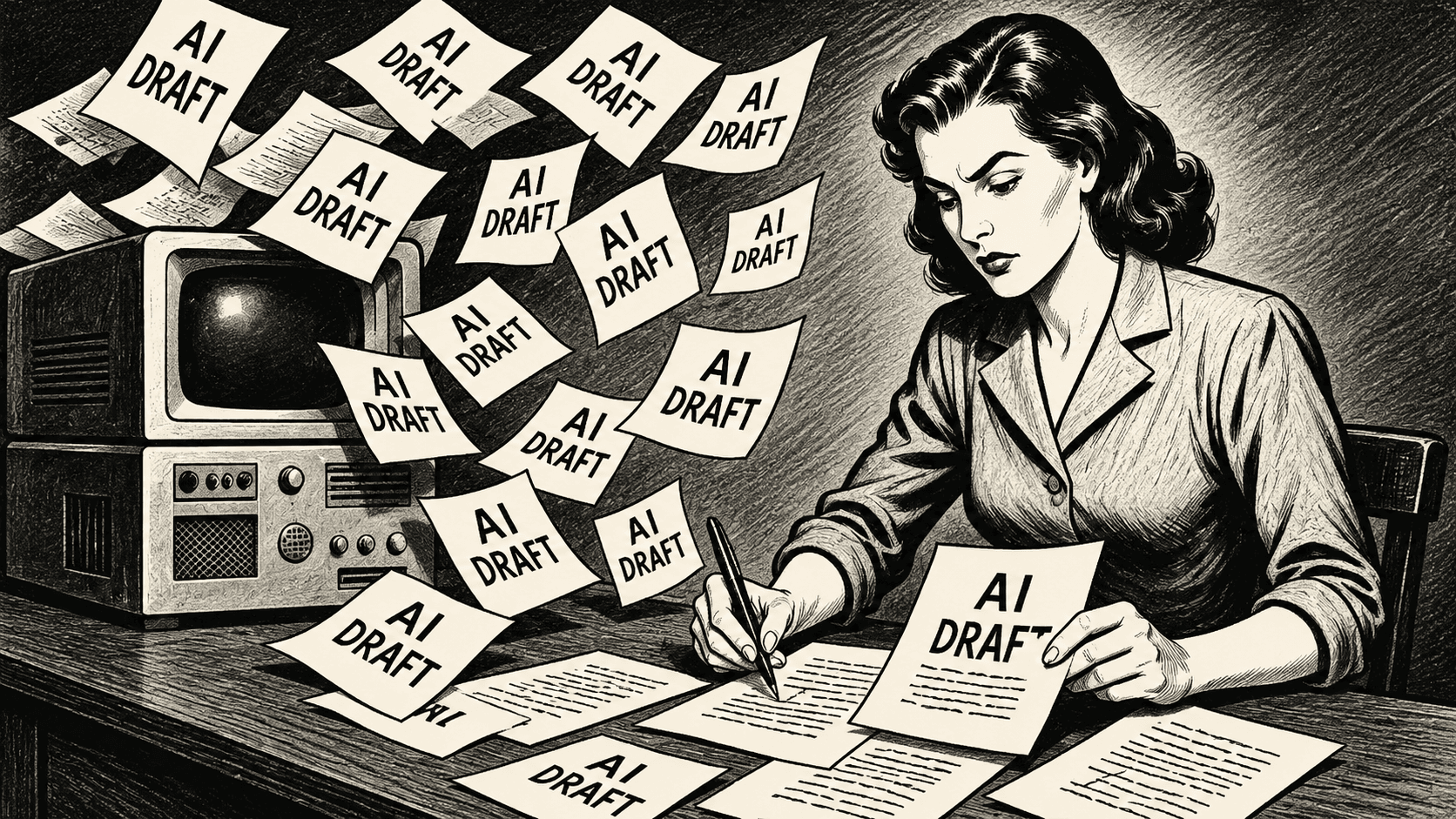
The AI Irony: Brought to Downsize HR, But Led to Its Expansion
Zuri has been an HR professional for eight years — managing attendance records, running monthly payroll, and sending onboarding paperwork to every new joiner. She was consistently good at her job. But when her company announced an AI deployment to automate payroll and attendance tracking, she grew anxious. She had read the headlines. She knew what AI does to jobs.
Fast-forward eighteen months: Zuri is still at the same company. But her job looks nothing like it used to. She now leads the company's AI ethics review process, partners with L&D to design skill-building programmes, oversees the people analytics function, and presents workforce insights directly to the leadership team. AI did not take her job. It transformed it.
"AI arrived with a reputation for cutting HR teams down. In many organisations, it is building them up instead."
— peopleHum Editorial, June 2026What AI Has Already Automated in HR
Before examining what roles AI opens up, it is worth identifying the ones it has taken over. Payroll and compensation processing now runs with minimal human input — AI calculates salaries, applies deductions, handles multi-country compliance, and processes payments automatically. What once required a team of payroll administrators now requires oversight and exception-handling.
Attendance and leave management, resume screening, interview scheduling, and employee query handling have all been similarly transformed. Over 87% of organisations now use AI at some point in the hiring process, according to DemandSage — screening applications, ranking candidates, and scheduling interviews at a speed and scale no human team can match. AI chatbots now answer a significant proportion of routine employee questions, freeing HR teams from repetitive query management.
"The same AI systems that automate HR transactions generate enormous volumes of data. That data needs to be interpreted, acted on, and governed — and that requires human expertise."
— peopleHum Blog, 2026The New HR Roles AI Is Creating
The strategic questions AI raises — about workforce capability, talent risk, organisational culture, and ethical AI use — cannot be answered by AI itself. Organisations are building dedicated HR roles to handle exactly that. People Analytics Specialists translate AI-generated workforce data into insights that drive better decisions, building dashboards that give leadership teams a real-time view of attrition, engagement, and performance. This role barely existed in most HR teams five years ago and is now one of the fastest-growing HR functions.
AI Ethics and Governance Leads oversee the selection, implementation, auditing, and governance of AI tools — ensuring that AI-driven decisions can be explained, challenged, and corrected. They act as the conscience of the AI system, requiring deep HR knowledge about what fairness in hiring looks like and what the consequences of algorithmic bias feel like for real people.
Learning & Development Designers for AI transitions are expanding rapidly, designing programmes to help employees build skills AI cannot automate and creating pathways for roles most affected by AI adoption. According to Gartner, organisations must shift from experience-based progression to skills-based advancement as AI reshapes roles — and building that shift requires dedicated HR expertise.
HR Technology Managers bridge the gap between tool and human context — working with vendors, overseeing implementation, and translating employee feedback into system improvements. Meanwhile, Employee Experience Designers are expanding because AI, by handling the transactional layer, has made the experiential layer more important. When slow processes and unanswered queries are no longer a problem, the quality of human interactions that remain matters more.
HR Expansion in Numbers
The growth is measurable. According to SHRM's State of AI in HR 2026 Report, 46% of organisations expect to use AI in HR in 2026, and 25% of CHROs now list AI upskilling as their number one priority for HR capability development. The global AI in HR market was valued at USD 6.25 billion in 2026 and is projected to grow at a compound annual growth rate of 24.8% through 2030, per Grand View Research. That growth does not happen without people to deploy, govern, and optimise these systems — and many of those people will sit inside HR teams.
The narrative that AI would downsize HR got the direction wrong. HR teams in 2026 are bigger, more specialised, and more connected to the decisions that matter most to the business in organisations using AI thoughtfully. AI arrived with a reputation for cutting HR down — and in doing so, it handed HR exactly the kind of work that earns it a permanent seat at the leadership table.
AI expanded HR, not shrunk it. The strategic layer of HR — governing AI, interpreting workforce data, designing employee experience, and building capability — has grown larger as automation handles the transactional work.
Transactional HR is genuinely automated. Payroll processing, attendance management, resume screening, interview scheduling, and routine query handling now require oversight rather than manual execution — HR should acknowledge this honestly.
New specialist roles are emerging fast. People analytics specialists, AI ethics leads, HR technology managers, workforce planning strategists, and employee experience designers are among the fastest-growing functions in HR — most barely existed five years ago.
The experiential layer now matters more. With AI eliminating transactional friction, the quality of human interactions — onboarding, recognition, and development conversations — has become the primary driver of employee engagement.
The market is growing at 24.8% annually. The global AI in HR market is projected to reach significant scale through 2030. Organisations building AI governance and people analytics capabilities now will be best positioned as demand accelerates.