
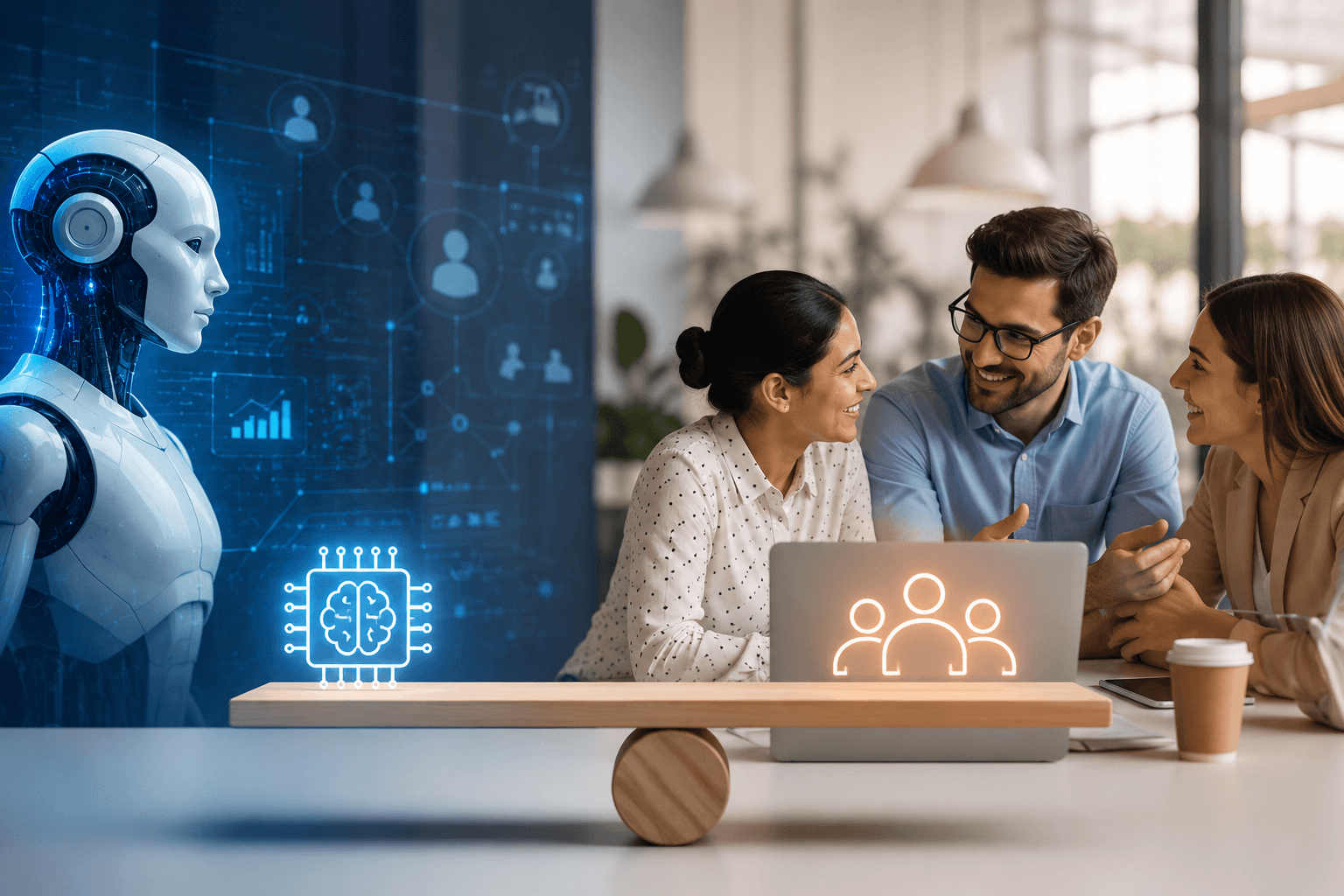
Reimagining HR's human side in an AI-first workplace
AI is now embedded in nearly every part of HR. It screens resumes, personalises learning, flags disengagement, and answers routine questions instantly. But this also raises a big question for CHROs globally: if AI handles so much of the employee experience, what is left for the human dimension of HR?
AI is taking over the repetitive, data-heavy parts of HR. That leaves more room for HR professionals to deal with situations that strictly need human input.
AI handles data. Empathy still needs a human
AI can flag when an employee's engagement is dropping, based on real behavioural patterns. It can spot when someone's workload looks unsustainable and notice when a new hire's onboarding progress has stalled, well before anyone would think to check in.
This gives HR teams visibility it never had before. But notice what AI is actually doing here. It is flagging a signal, not responding to a person. An algorithm can tell you someone's engagement dropped 20% this month, but it cannot have the actual conversation about why, or sit with someone through a difficult moment, or read the hesitation in their voice when an employee says they are fine and clearly are not.
"This is the real division of labour emerging in AI-first workplaces: AI handles detection, while humans handle response."
— Team peopleHumWhere HR's human side becomes more important
A common concern is that AI erodes the relevance of HR professionals. The evidence does not support that concern. As AI absorbs administrative and repetitive tasks, the moments that remain for HR professionals are the ones that require judgment, empathy, and trust.
Before AI, HR teams used to spend most of their time processing paperwork, answering the same policy questions repeatedly, and manually tracking onboarding checklists. None of this left any time for HR to build genuine connections with employees.
Now that AI handles much of these tasks, HR professionals have more time for the conversations that matter. That may involve a career discussion with someone feeling stuck, a genuine check-in with someone going through a difficult period, and a thoughtful response to a team's specific concerns.
This reframes the entire conversation for CHROs. The goal is not protecting HR's human side from AI. It is ensuring that the time AI frees up is deliberately redirected.
"Employees can tell the difference between a scripted response and human communication, and that difference matters enormously in moments of vulnerability."
— Team peopleHumAdapting without losing the human core
Adapting to an AI-first workplace requires a few deliberate choices. Start by being explicit about where AI's reach ends and human judgment begins. Employees should always know when they are interacting with an AI assistant rather than a person, and should always have a clear, easy path to reach a real human when something matters enough to require one.
Next, resist the temptation to let AI handle emotionally sensitive moments. An AI chatbot can technically respond to a message about burnout or personal distress. It shouldn't be the primary response. These moments need a human, because employees can tell the difference between a scripted response and human communication.
Train managers to use AI-generated insights as a starting point for conversations. If AI flags that an employee's engagement has dropped, the right response is a manager having an actual, unscripted conversation, informed by what AI noticed, but delivered with real attention and care.
Finally, measure what actually matters. It is tempting to evaluate HR's AI adoption purely through tickets resolved, time saved, and tasks automated. These matter, but they are not the full picture. The better measure is whether employees feel more supported, which requires asking employees directly and regularly whether the human side of their experience feels intact.
Building employee experience that uses both well
Consider onboarding as an example. AI can handle the checklist, reminders, and routine questions a new hire has about the system or pay structure. This frees up a manager's time to focus entirely on making a new hire feel genuinely welcomed, explaining unwritten team norms, and building the early relationship that determines whether someone feels like they belong.
Platforms like peopleHum are built around exactly this principle, using AI to handle the repetitive, data-driven parts of employee experience, while flagging insights that help HR professionals and managers have better conversations.
This distinction matters more as organisations scale. In a small company, workplace empathy happens naturally because HR professionals know every employee well. As headcount grows across teams, that natural closeness gets harder to maintain. AI helps preserve consistency at scale, ensuring that no employee falls through the cracks simply because they are one of thousands rather than one of thirty, but it still requires HR teams to intentionally direct the freed-up time toward genuine human moments.
Why this balance deserves CHRO attention now
Getting this balance right requires deciding, deliberately, where AI's role ends and where a person needs to step in. It means training managers to use AI insights as a prompt for better conversations. Done well, AI tools help HR deal with human conflict quickly and consistently, giving HR professionals more time and better information to genuinely understand and support the people they work with.
AI detects, humans respond. An algorithm can flag that engagement dropped 20% this month, but it cannot have the conversation about why, sit with someone through a hard moment, or read the hesitation when an employee insists they're fine.
Freed-up time is the opportunity. With AI absorbing paperwork and repetitive queries, the time that remains should go toward the conversations that build genuine connection, not new administrative busywork.
Sensitive moments must reach a human. A chatbot can technically reply to a message about burnout, but it shouldn't be the primary response. Employees can tell scripted replies from genuine attention, especially when they're vulnerable.
Insights are a prompt, not a substitute. Managers should treat AI-flagged signals as a starting point for an unscripted human conversation, not as an automated follow-up message.
Measure whether people feel supported. Tickets resolved and tasks automated are useful, but the real metric is whether employees feel the human side of their experience is intact, which means asking them directly and often.