
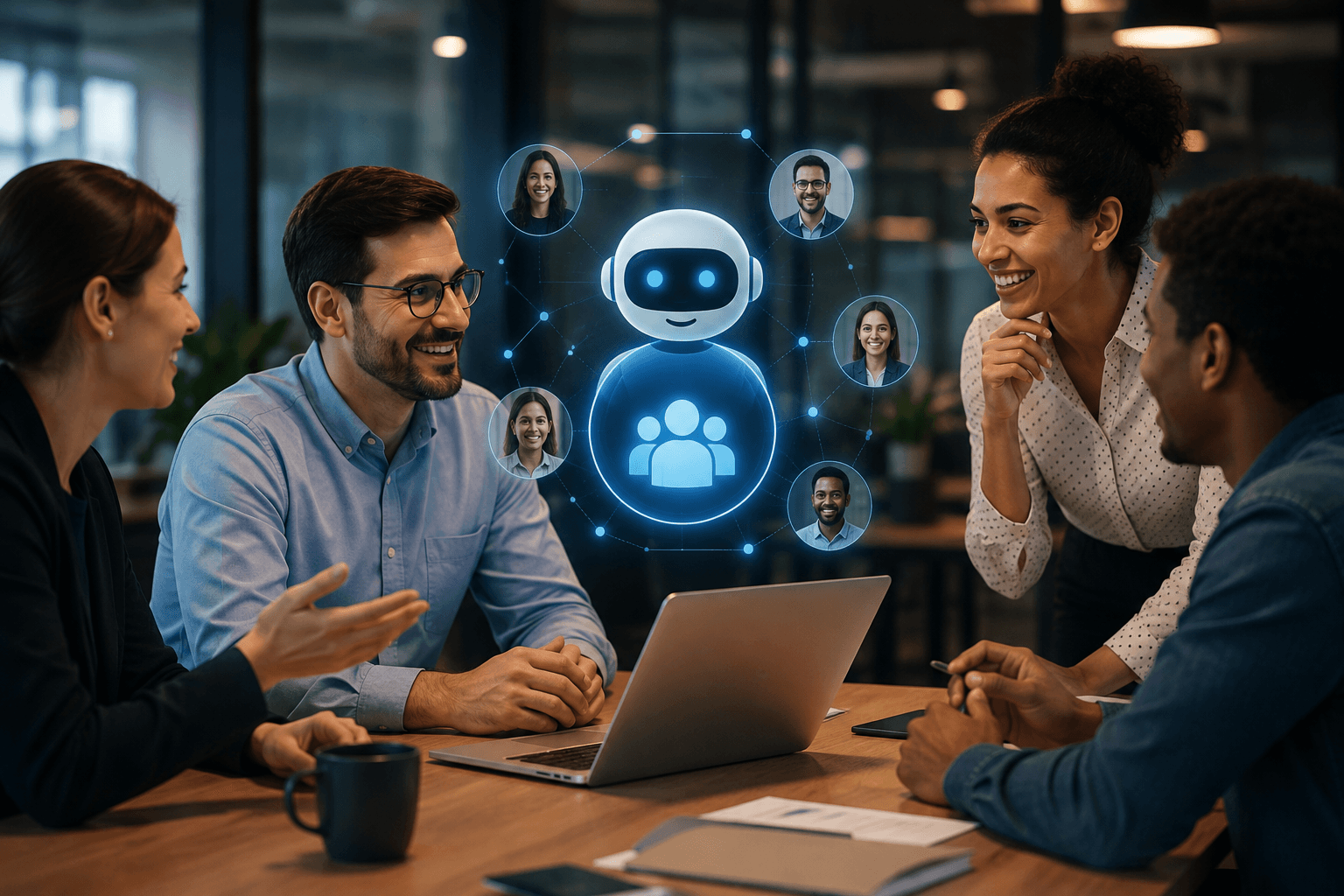
Can AI help HR connect with employees at a deeper level?
It sounds counterintuitive at first — software helping people feel more understood. But that is exactly the promise behind AI in HR today. It is not replacing human connection, but clearing the way for more of it.
Before we move forward, it is worth acknowledging that this scepticism is fair. Most people's experience of workplace technology has often involved generic emails, robotic chatbots, and systems that feel like they were built for efficiency, and not empathy. But the actual potential of AI in HR is about removing the barriers that currently stop real connection from happening consistently, for every employee.
"AI in HR does not replace the manager's attention — it ensures that attention gets directed to the right person, at the right time."
— peopleHumWhy deep connection breaks down at scale
A manager overseeing five people can notice when someone is quieter than usual, remember details about their life outside work, and check in without needing a system to prompt them. In such an environment, connection builds naturally. That falls apart as organisations grow. A manager with a twenty-five-member team simply cannot give the same quality of attention to everyone.
This is the real problem AI in HR is positioned to solve. It does not replace the manager's attention, but ensures that attention gets directed to the right person, at the right time, instead of being spread thin and applied unevenly based on who happens to speak up.
Where AI in HR actually adds depth
Most conversations about AI in HR focus on efficiency — faster answers, automated paperwork, or quicker onboarding. While this is true, it undersells what is actually possible. Consider a manager preparing for a one-on-one meeting. Without AI, they walk in with whatever they remember from recent interactions, which is often incomplete or recency-biased. With AI surfacing relevant context, that manager walks into the same conversation far better equipped to ask the right question, not a generic one.
The same logic applies to HR teams managing engagement across an entire organisation. Instead of waiting for an annual survey to reveal, in aggregate, that engagement dropped somewhere, AI can point to specific teams or individuals where something is shifting, in real time. That precision is what turns a vague company-wide initiative into an actual, targeted conversation with the person who needs it.
"AI can flag that an employee's engagement has dropped. It cannot understand why, sit with someone through a hard conversation, or build the kind of trust that develops over time."
— peopleHumRemoving friction so humans can focus
A significant part of why HR struggles to connect deeply with employees is a lack of time, most of which is eaten up by repetitive, low-value tasks — answering the same policy question repeatedly, manually tracking who has completed onboarding steps, chasing paperwork that should have been automatic. AI in HR absorbs much of this. Routine questions get answered instantly through AI assistants, without needing a human at all.
This reframes what "AI in HR" should actually mean for CHROs evaluating these tools. The right question is not "how much can this automate?" It's "does this free up more time for real human interaction, and does that freed-up time actually get used that way?" The technology only creates deeper connection if organisations deliberately redirect the time it saves toward people, not toward doing more administrative work with the same headcount.
The limits worth being honest about
None of this works if AI is treated as a substitute for human attention rather than an enabler of it. Employees can tell the difference between a system that notices them and a person who actually does. This means deploying AI with clear boundaries — let it handle detection, routine answers, and pattern recognition, and keep the actual response, the conversation, and the judgment call firmly with a human. The moment AI starts trying to replace that part, the connection it was meant to enable disappears entirely.
There's also a transparency requirement. Employees should know when they are interacting with an AI system versus a person, and should always have an easy path to reach a human when something matters enough to need one. Platforms like peopleHum are built around exactly this approach — using AI to surface the right signals at the right time, so managers and HR professionals can spend their attention where it actually matters. The goal is not a more automated employee experience. It is a more genuinely attentive one.
Attention, directed. Deep connection breaks down at scale not because managers stop caring, but because attention spreads too thin. AI directs it to the right person at the right moment, instead of applying it unevenly based on who speaks up.
Depth is context, not speed. A manager walking into a one-on-one with AI-surfaced insights asks a specific, informed question instead of a generic one — turning a routine check-in into an actual conversation.
Reclaimed time must be reinvested. AI frees up the time HR loses to low-value tasks, but that only deepens connection if organisations deliberately redirect it toward people rather than more admin work.
Detection is AI, response is human. AI can flag that engagement has dropped, but it cannot understand why or build trust over time. The moment AI tries to replace the human response, the connection it was meant to enable disappears.
A more attentive experience. The goal is not a more automated employee experience — it is a more genuinely attentive one, made possible because AI quietly handles everything that used to get in the way of real human interaction.